


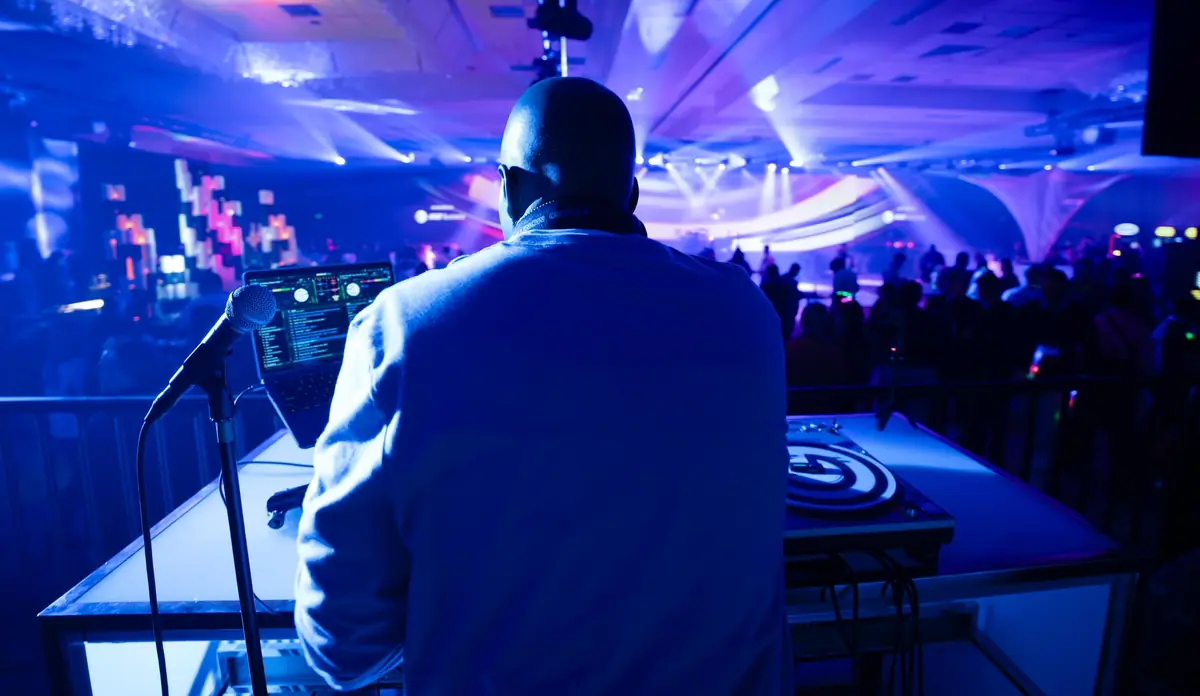
Entertainment is often the first line cut from an event budget because its value feels hard to measure. But it affects attendance, engagement, brand perception and whether people come back next year. I’m Martin Smith, known as DJ Graffiti and The Keynote DJ™.
I’m based in Ann Arbor, Michigan, and my work centers on building retention, inclusion, culture and wellness through interactive music experiences.
I’m not an analyst, but I’ve worked enough events for brands like Amazon, Nike and Google to know what an engaged room looks like and how teams measure it. Here’s how to think about the return on entertainment and which metrics to track.
What ROI means for an event
- Financial: leads, pipeline, renewals or revenue influenced by the event.
- Behavioral: session attendance, time on the expo floor, participation in activities.
- Brand: sentiment, recall and social sharing.
- Cultural: morale and retention for internal events.
How entertainment shows up in the numbers
Attendance and punctuality
Walk-in music and a strong host get people into the room on time and keep them there.
Conversation
The right volume and the right songs make introductions easier. Rooms that feel comfortable produce more conversations.
Retention and inclusion
Music is one of the few things that brings every age and background onto the same floor. Employees who feel included stay longer.
Brand impression
A polished event says something about your company. Entertainment is one of the most visible parts.
Metrics to track
| Metric | How to measure | What it tells you |
|---|---|---|
| Attendance by session | Badge scans or head counts | Whether the program holds the audience |
| Dwell time | Scans or staff observation | How long guests stay in key areas |
| Survey scores | Post-event survey | Experience and entertainment satisfaction |
| Net promoter score | Would you recommend this event? | Advocacy |
| Social mentions | Event hashtag and posts | Reach and sentiment |
| Pipeline or sales | CRM attribution | Business outcomes the event influenced |
Build measurement into the plan
- Define goals before you choose entertainment.
- Choose two or three metrics tied to those goals.
- Add survey questions about music, hosting and pacing.
- Capture observations from your team during the event.
- Review after the event and share the findings.
Useful survey questions: How would you rate the music and atmosphere? Was the program well paced?
How likely are you to attend next year?
Where entertainment spending pays off
- General sessions, where pacing and energy matter.
- Networking receptions, where conversation is the goal.
- Awards and recognition, where morale is the outcome.
- After-parties, where social sharing extends your reach.
For ideas, see audience participation events and corporate awards entertainment.
How I plan around goals
I start with what you want the event to do.
I advise on pacing and segment transitions, and I adjust the music in real time to match how your audience responds. I don’t write your full run of show, but I can tell you where the energy is likely to drop and how to fix it. For budgeting, see the corporate DJ cost guide and the pricing calculator.
Frequently asked questions
Can entertainment ROI be measured?
Yes, through attendance, engagement, survey and business metrics tied to your goals.
What should I ask in a survey?
Ask about music, hosting, pacing and likelihood of returning.
When should I plan measurement?
Before you book entertainment, so you can align it with your goals.
Plan your event
Tell me what success looks like.
Check availability or read about corporate DJ and emcee services.